Effect of water management practices on rice productivity in the Lower Ouémé Valley in Southern Benin (West Africa)
recommended to keep the paddy field soil moist by alternating between days of wetting and drying, which reduces water loss through evaporation and percolation. All these agronomic and water management practices aim to improve the productivity of cultivated rice. However, few studies have examined how Smart-valleys development and irrigation management practices affect the performance of rice-growing systems in the LOV [13, 14, 24]. It therefore seems necessary to understand the extent to which these water management practices can help improve rice productivity in the LOV, while incorporating local specificities and recommendations from the System of Rice Intensification (SRI).
Materials and methods
Study area
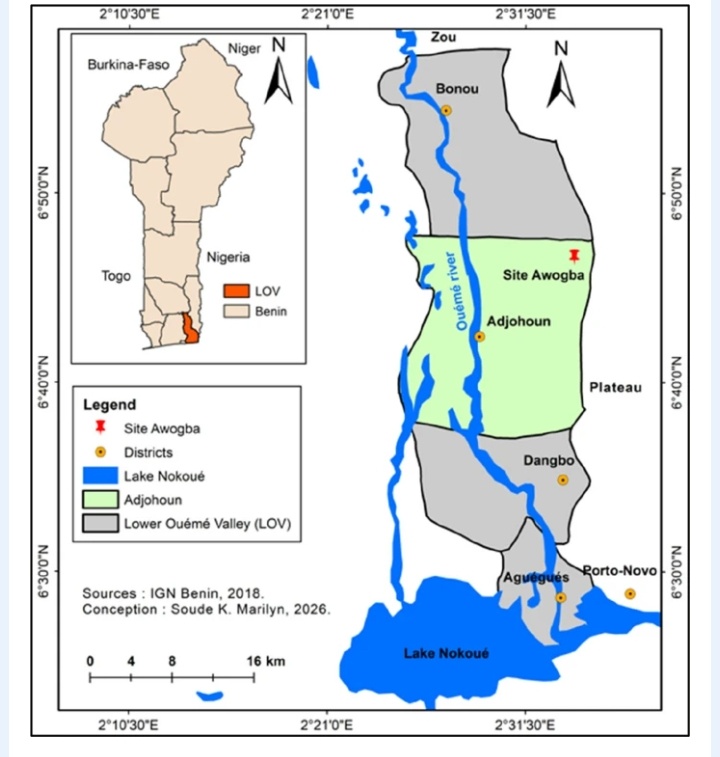
The field experiment was conducted from May to September 2024 at the Awogba rice production site in Silico-Dogbamey (6° 46′ 36.4″ N 2° 34′ 05.3″ E), located in the municipality of Adjohoun in the Lower Ouémé Valley (LOV), southeastern Benin. The Awogba floodplain was selected based on its proximity to a reliable irrigation water source, the organization of farmers into cooperatives, and their extensive experience in rice production. The Awogba inland valley is located in a section of the LOV that is generally not affected by the seasonal overflow of the Ouémé River, which typically occurs during August and September. This hydrological setting provides relatively stable conditions for rice cultivation and allows controlled irrigation management during the cropping season. The study area has a sub-equatorial climate characterized by a bimodal rainfall regime, with two rainy seasons (April to July and September to October) alternating with two dry seasons (November to March and August). Mean annual rainfall ranges from approximately 900 mm to 1300 mm [1]. Temperature remains relatively high throughout the year, with mean maximum temperatures reaching approximately 29.4 °C in March and minimum temperatures of about 26 °C in August. The soils of the study area are predominantly clay loam and are considered suitable for rice production due to their favorable physicochemical and hydrological characteristics [13]. Figure 1 shows the geographical location of the study area.
Article source: https://link.springer.com/article/10.1007/s44533-026-00078-w#Fig1