Ghana: Rice farmers share climate-smart practices at Tono Irrigation Scheme
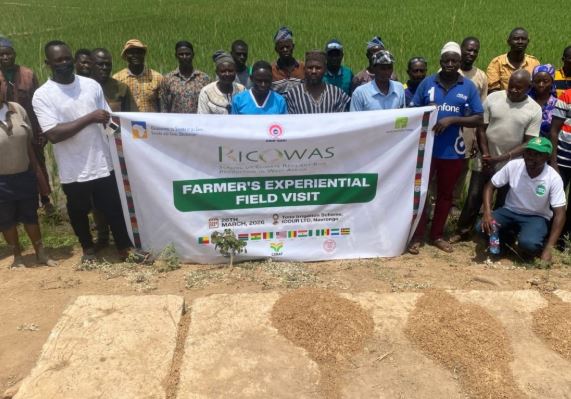
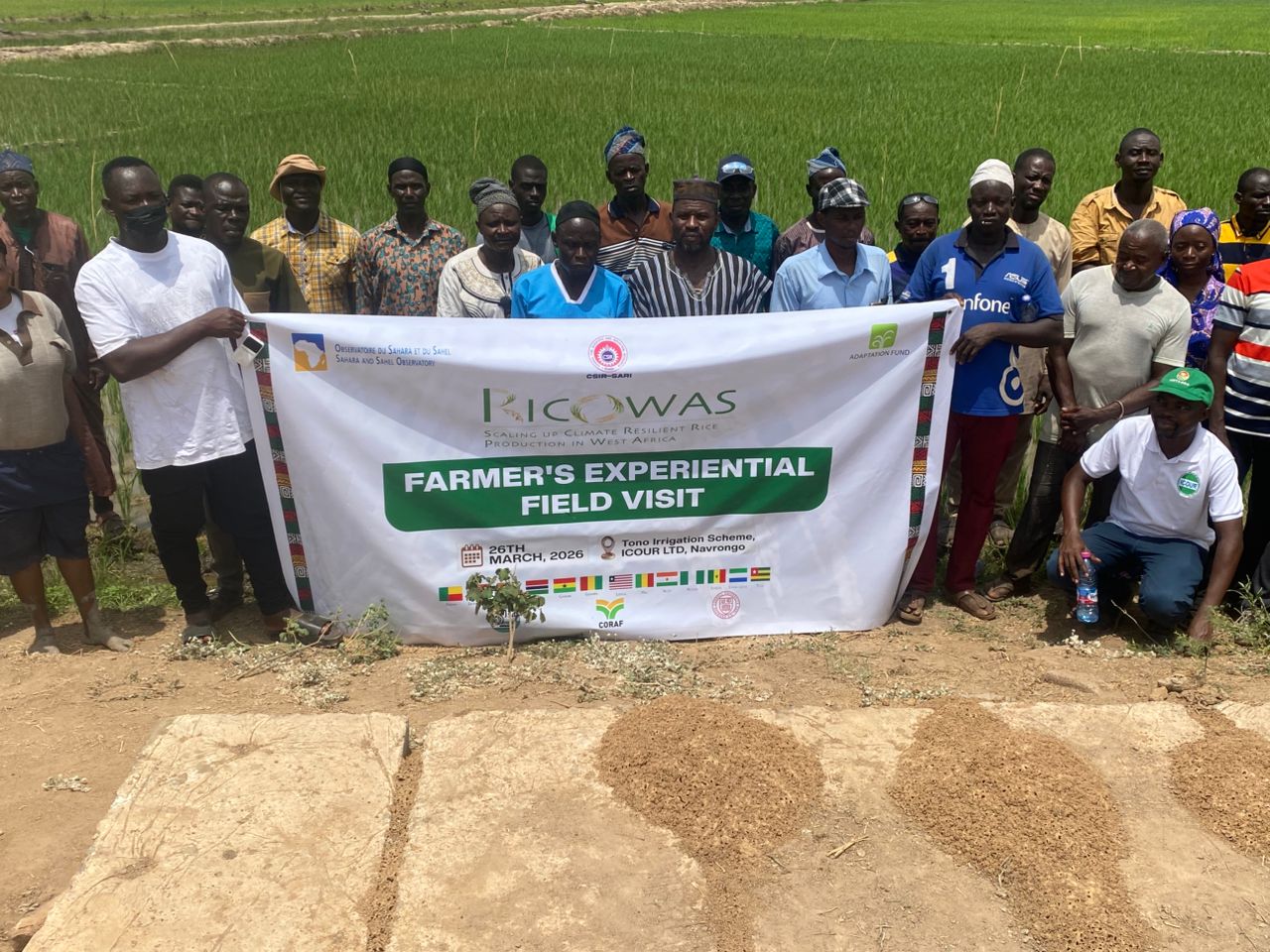
The Savannah Agricultural Research Institute (SARI) has facilitated a cross-regional learning visit for rice farmers to the Tono Irrigation Scheme as part of efforts to strengthen climate-resilient agriculture and boost rice productivity in northern Ghana.
The initiative forms part of the Scaling Up of Climate Resilient Rice Production Practices in West Africa (RICOWAS) project, a multi-country intervention spanning 14 West African nations, with Ghana participating under SARI’s coordination.
Leading the engagement, rice breeder Alex Yeboah explained that the visit was designed to promote peer-to-peer learning among farmers and encourage the practical adoption of improved rice production techniques.
“We brought farmers from the Northern Region to interact directly with their counterparts here at Tono,” he said. “Farmers learn best from fellow farmers. When they see what works in similar conditions, adoption becomes easier.”
The visiting group included about 35 farmers from irrigation schemes such as Butanga and Golinga, as well as participants from rain-fed farming communities. They joined 15 to 20 farmers at Tono for the hands-on exchange.
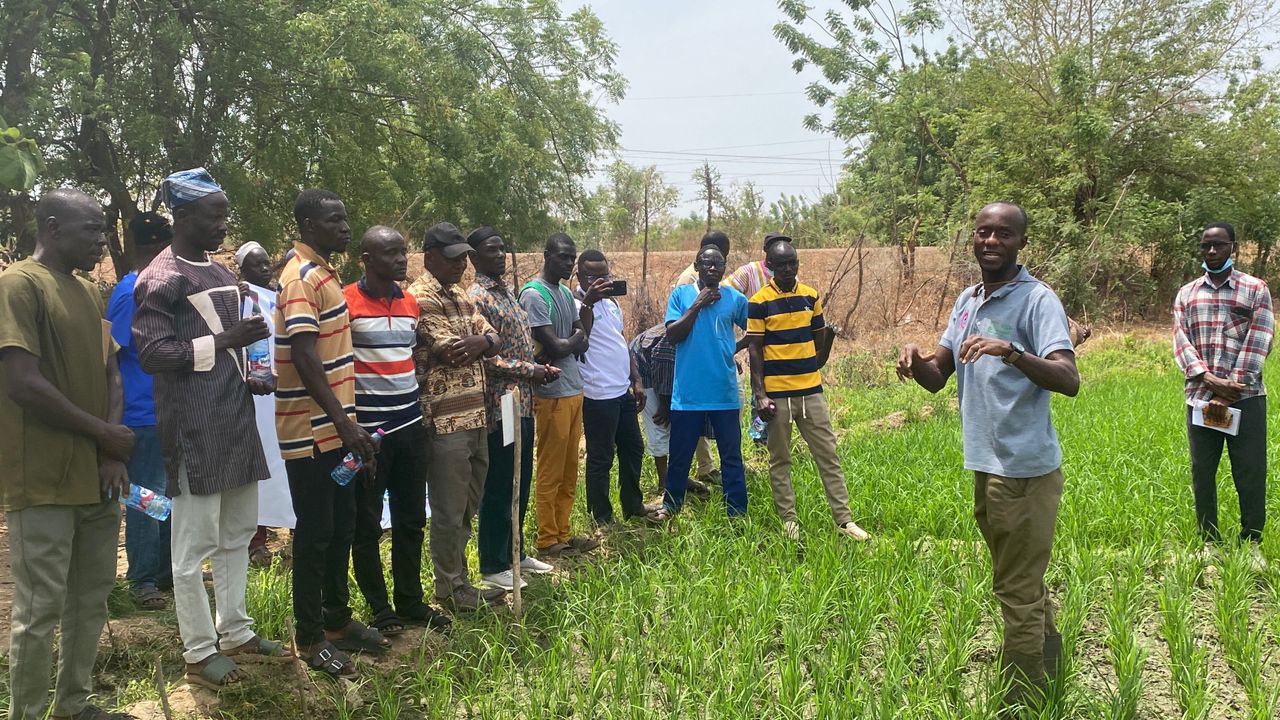
One of the participants, Sumana Sumana, said the visit had improved his understanding of modern farming techniques.
“This visit helped us learn better farming practices and share ideas with other farmers. I observed that applying fertilizer in stages increases yield, and I will adopt it. I’ve also learned improved planting and water management techniques,” he said.
The Tono Irrigation Scheme, widely regarded as Ghana’s largest irrigation facility, provided an ideal setting for the exercise, allowing farmers to observe innovative and sustainable farming practices firsthand.
Among the techniques highlighted was the Alternate Wetting and Drying (AWD) method, a water-saving approach that enables farmers to manage water efficiently while maintaining high yields.
“We’ve seen encouraging signs here,” Mr. Yeboah noted. “Farmers are already applying AWD, which aligns with what the RICOWAS project is promoting.”
The project also promotes the System of Rice Intensification (SRI), a method aimed at increasing yields through improved planting, spacing, and water management. While adoption remains gradual, officials say the exposure visit is expected to accelerate uptake.
In addition, SARI is promoting climate-resilient rice varieties suited to local conditions. During a similar engagement last year, the institute showcased improved and hybrid rice varieties at Tono.
According to Mr. Yeboah, one standout variety—CSR Bansi Rice—has gained popularity among farmers due to its short maturity period of 85 to 90 days.
“Farmers saw the benefits immediately,” he said. “Many requested seeds after the demonstration.”
To meet growing demand, SARI has partnered with the Food Systems Resilience Project (FSRP) to scale up the production of basic seeds for the Bansi variety.
However, he noted that some hybrid rice varieties are still undergoing research and have not yet been released for large-scale cultivation.
“We are allowing farmers to observe their performance under local conditions. Once they are ready, adoption will be easier because farmers are already familiar with them,” he explained.
The RICOWAS project highlights the need to build resilience in rice production systems in the face of climate variability. By facilitating farmer-to-farmer learning, SARI aims to bridge knowledge gaps and promote the widespread adoption of climate-smart practices.
Despite budget constraints limiting participation, SARI believes the impact will extend beyond those directly involved.
“When these farmers return to their communities, they become ambassadors of change,” Mr. Yeboah said. “They will share what they’ve learned, and that is how transformation spreads.”
A1 Radio | 101.1 MHz | Samuel Adagom | Tono
Article sourced from: https://www.a1radioonline.com/80021/rice-farmers-share-climate-smart-practices-at-tono-irrigation-scheme/index.html